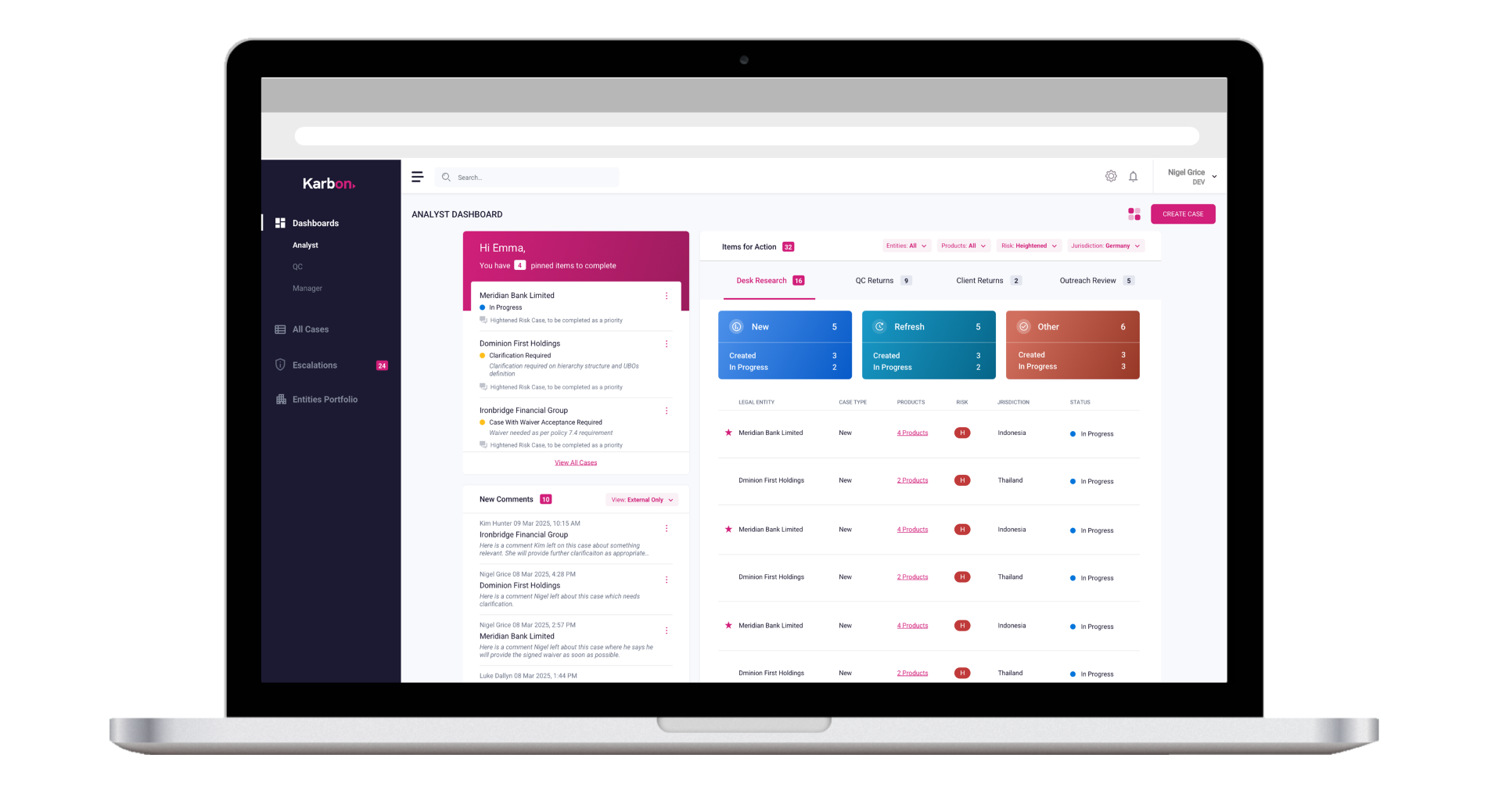
Giulia Baldini, Head of Design for Karbon, shows how productivity power is designed into Karbon Core – enabling faster decisions, fewer delays, and smoother execution for Client Lifecycle Management (CLM) and onboarding teams operating at enterprise scale.
For CLM and onboarding teams operating at enterprise scale, productivity gaps don’t just slow work down, they increase risk, extend onboarding timelines, and erode confidence across the business. When visibility is fragmented and workflows stall, teams lose momentum long before KPIs are missed.
That belief sits at the heart of how we’ve designed Karbon, our CLM orchestration product. We don’t design Karbon in isolation; we design it alongside the practitioners who run CLM every day. Their experience shapes every workflow, feature, and capability, guided by a simple question: does this make someone’s working day easier, clearer, and more effective?
The result is a CLM platform with built‑in productivity power, engineered by practitioners, proven in production, and built for the future. Karbon helps teams move faster, manage risk with confidence, and move work forward smoothly across the entire client lifecycle, delivering better experiences at every touchpoint.
The Productivity Problem We Set Out to Solve
In many CLM workflows, productivity is lost long before anyone realises it. Not in one big moment, but through hundreds of small points of friction that slow teams down over time.
If any of the following feel familiar, productivity is already leaking from your CLM process:
- Critical information scattered across systems, forcing manual reconciliation
- Forms and processes that create uncertainty and rework
- Approval bottlenecks that delay onboarding decisions
- Rigid workflows that don’t reflect how teams actually operate
- Limited ability to work in parallel without losing oversight
Individually these issues seem manageable. Together, they create uncertainty, rework, and delays that drain productivity and confidence.
Designing Productivity Into Every Stage of the Lifecycle
Our approach to productivity starts with design. Not design for speed alone, but design that balances simplicity with enterprise‑grade control.
That means:
- Reducing cognitive load so users can focus on decisions, not navigation
- Making the right information visible at the right moment
- Supporting autonomous work without losing oversight
- Designing workflows that mirror real‑world team behaviour
Each of these design choices directly reduces handling time, decision latency, and rework across onboarding and lifecycle events.
What Productivity Power Looks Like in Karbon
One reliable source of truth
We’ve brought all entity and KYC data into a single, trusted location. No more jumping between tools or maintaining unnecessary spreadsheets to fill the gaps.
The result? Fewer hand‑offs, less duplication, and faster progression through onboarding milestones.
Transparency that drives confident decisions
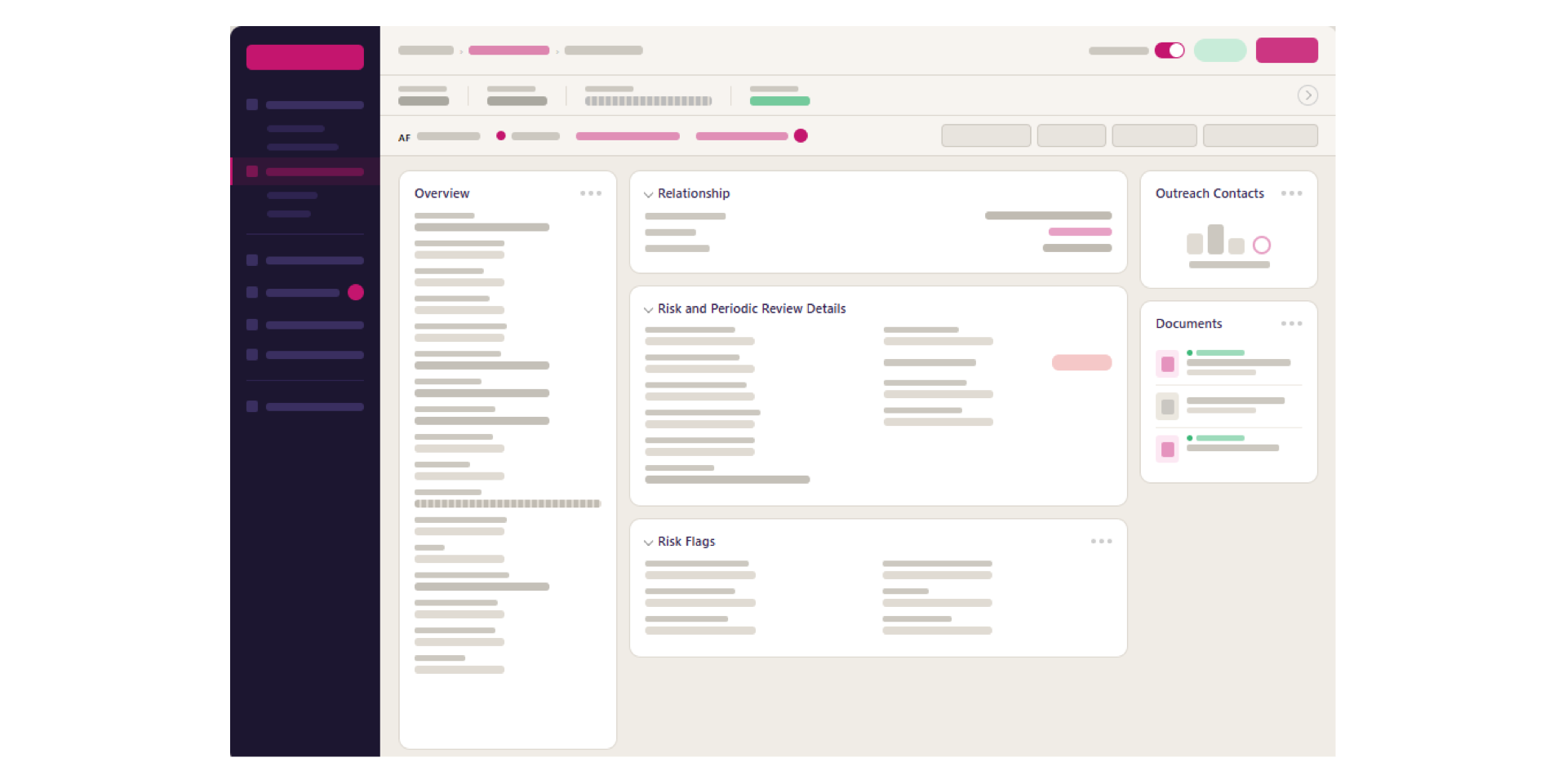
Productivity improves when teams understand exposure instantly. Karbon makes data processing transparent, allowing users to quickly answer questions like “Where am I exposed?” – whether by individual, region or risk dimension.
This shortens investigation cycles and enables earlier, more confident escalation when risk thresholds are reached.
Role‑based dashboards with actionable insight
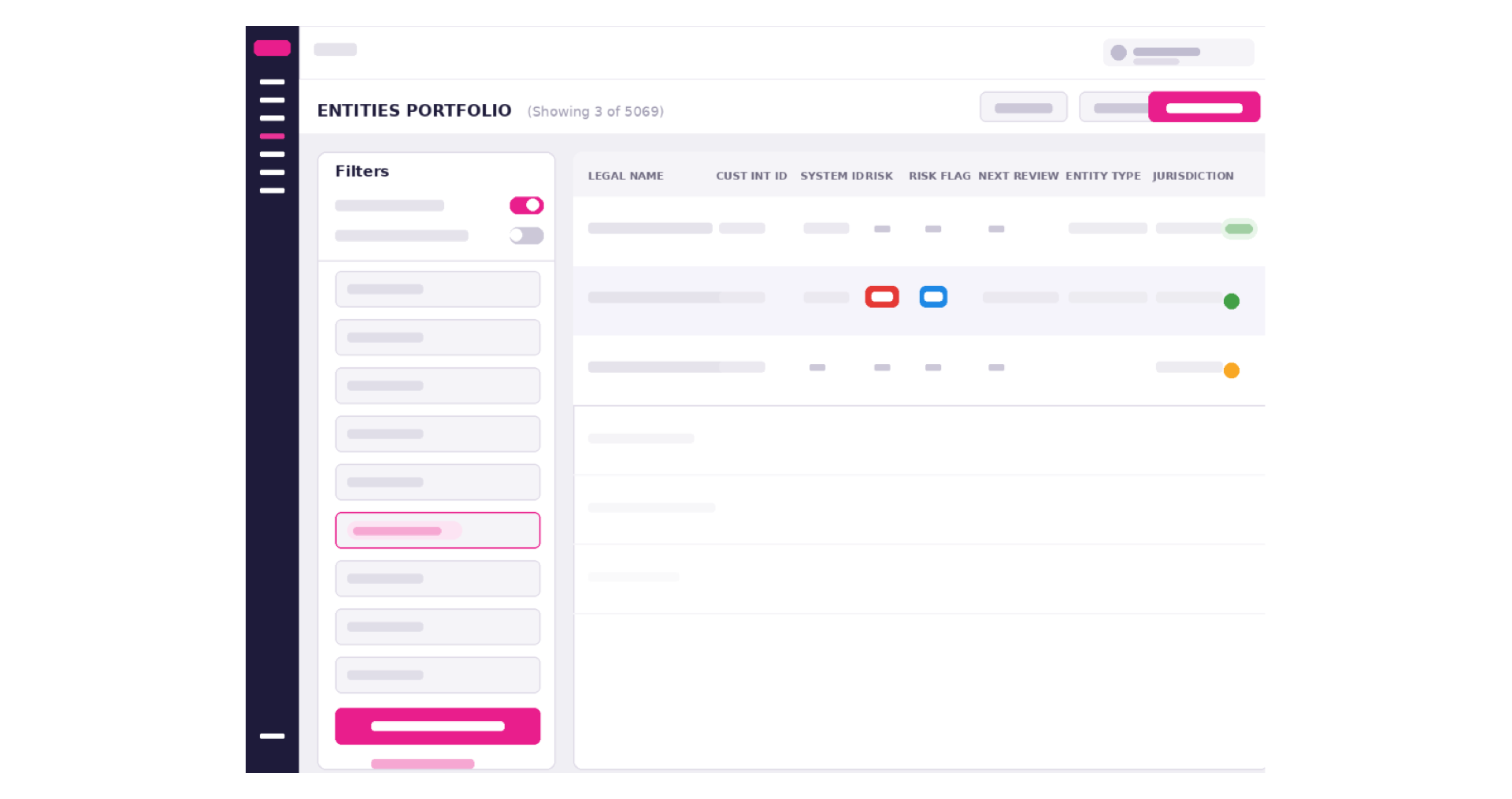
Real‑time dashboards surface what matters most to each role – not just raw data, but actionable insight.
Teams spend less time searching for information and more time progressing cases that matter.
Built‑in guidance that keeps work moving
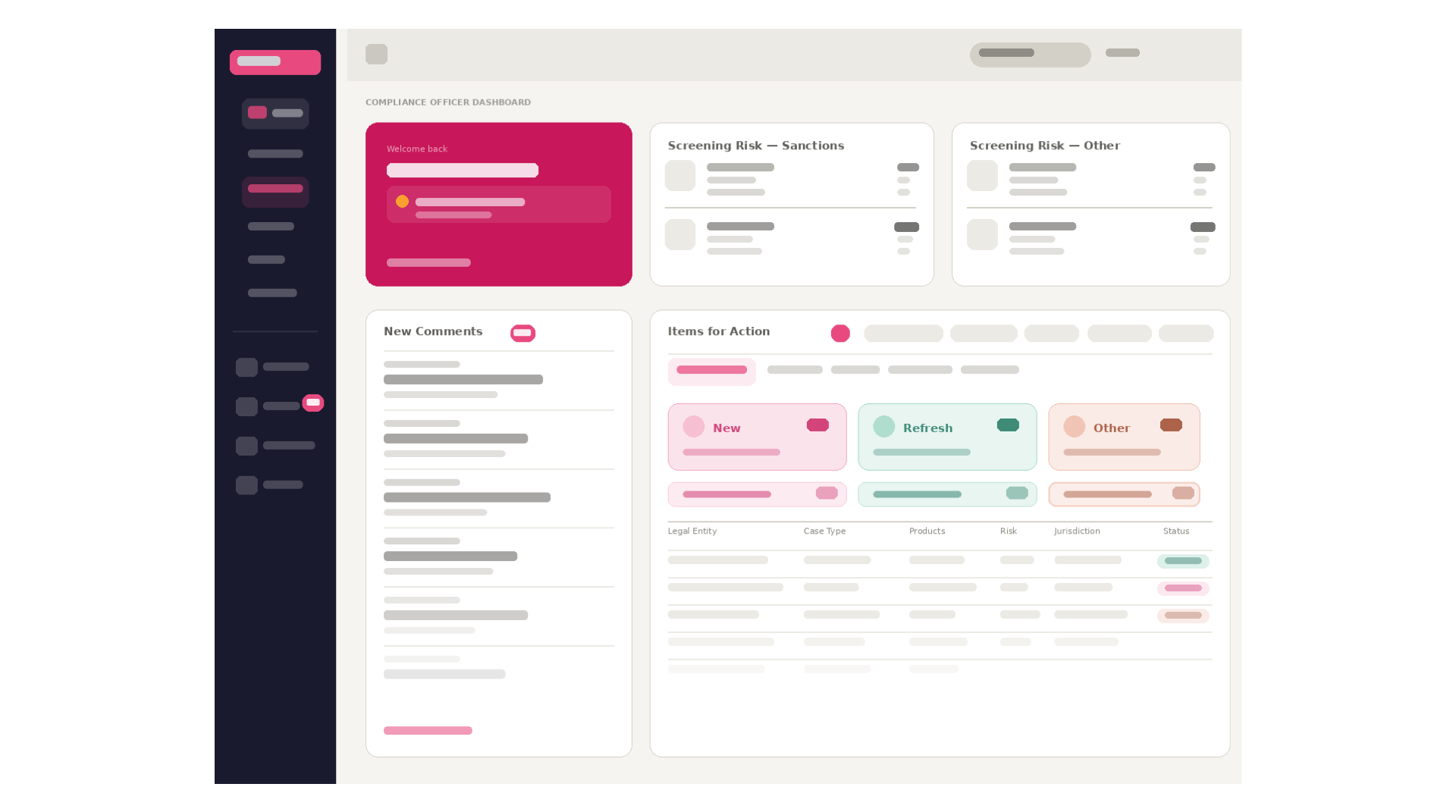
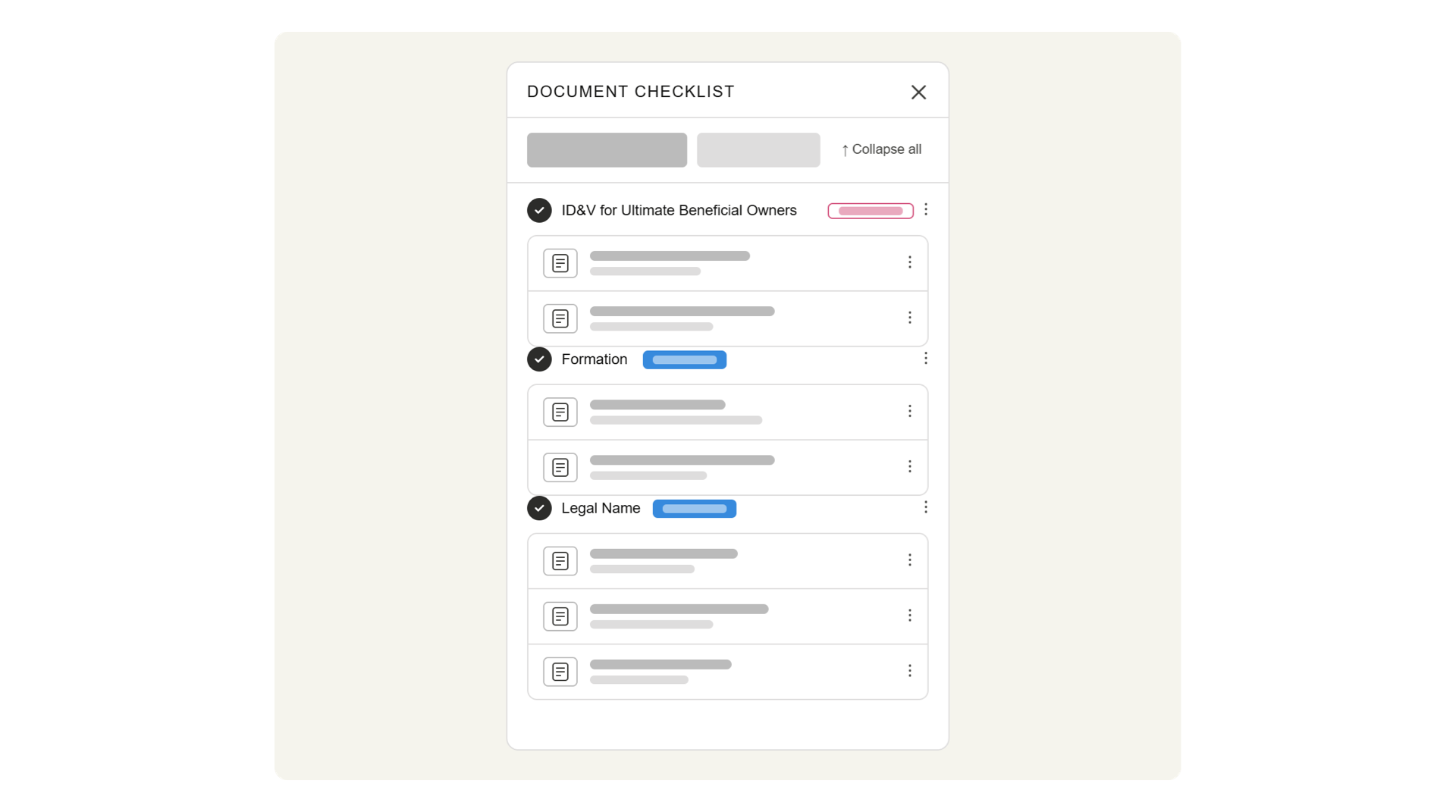
Checklists and alerts are built-in to the system, acting as a quiet guide in the background.
Quality improves without adding process overhead, a critical balance at enterprise scale.
The Outcome: Productivity You Can Feel
When productivity is designed in, rather than bolted on, the impact is immediate and measurable. Teams using Karbon experience:
- Lower user friction across everyday tasks, reducing handling time
- Greater confidence in decisions and data, lowering operational risk
- Fewer delays caused by rework, uncertainty or approval bottlenecks
- Effective workload management making it easier to assign work, balance capacity and keep progress on track
That’s productivity power in action: not just faster work, but better work, delivered with less effort.
How Delta Capita Can Help
Delta Capita helps financial institutions manage CLM and client onboarding by designing and operating end‑to‑end Client Lifecycle Management solutions that combine advisory expertise, CLM technology, and mutualised managed services to remove fragmentation, reduce manual effort, and improve outcomes across the full client lifecycle.
Frequently Asked Questions About Karbon
What is productivity power in Client Lifecycle Management (CLM)?
Productivity power in CLM refers to the ability for teams to progress onboarding and lifecycle work smoothly, with fewer delays, less rework, and greater confidence in decisions. It is not just about speed, but about maintaining momentum across complex, multi‑step processes at enterprise scale.
How does Karbon improve productivity for onboarding and CLM teams?
Karbon improves productivity by reducing cognitive load, making the right information visible at the right time, supporting autonomous work, and aligning workflows to how teams actually operate. These design choices help reduce handling time, decision latency, and rework across onboarding and lifecycle events.
What productivity challenges does Karbon address?
Karbon is designed to address common productivity challenges in CLM, including fragmented data across systems, unclear forms and processes, approval bottlenecks, rigid workflows, and limited ability for teams to work in parallel without losing oversight.
How does Karbon provide a single source of truth for CLM data?
Karbon brings all entity and KYC data into a single, trusted location. Historical data is preserved over time, reducing the need for spreadsheets and manual reconciliation while giving teams a complete, consistent view of each entity throughout the client lifecycle.
How does Karbon support better decision‑making in CLM?
Karbon improves decision‑making by making data processing transparent and exposure easy to understand. Users can quickly assess risk by individual, region, or other dimensions, enabling faster investigation and more confident escalation when thresholds are reached.
What role do dashboards play in productivity within Karbon?
Role‑based dashboards in Karbon surface actionable insights tailored to different teams. By focusing attention on what matters most, dashboards reduce time spent searching for information and help teams prioritise and progress cases more efficiently.
How does Karbon reduce rework and delays in onboarding workflows?
Karbon reduces rework and delays by embedding checklists and alerts. This built‑in guidance helps teams stay on track, avoid missed steps, and maintain quality without adding unnecessary process overhead.
Who is Karbon designed for?
Karbon is designed for financial institutions and CLM teams operating at enterprise scale, including those managing onboarding, KYC, and ongoing client lifecycle activities across complex, high‑volume environments.